
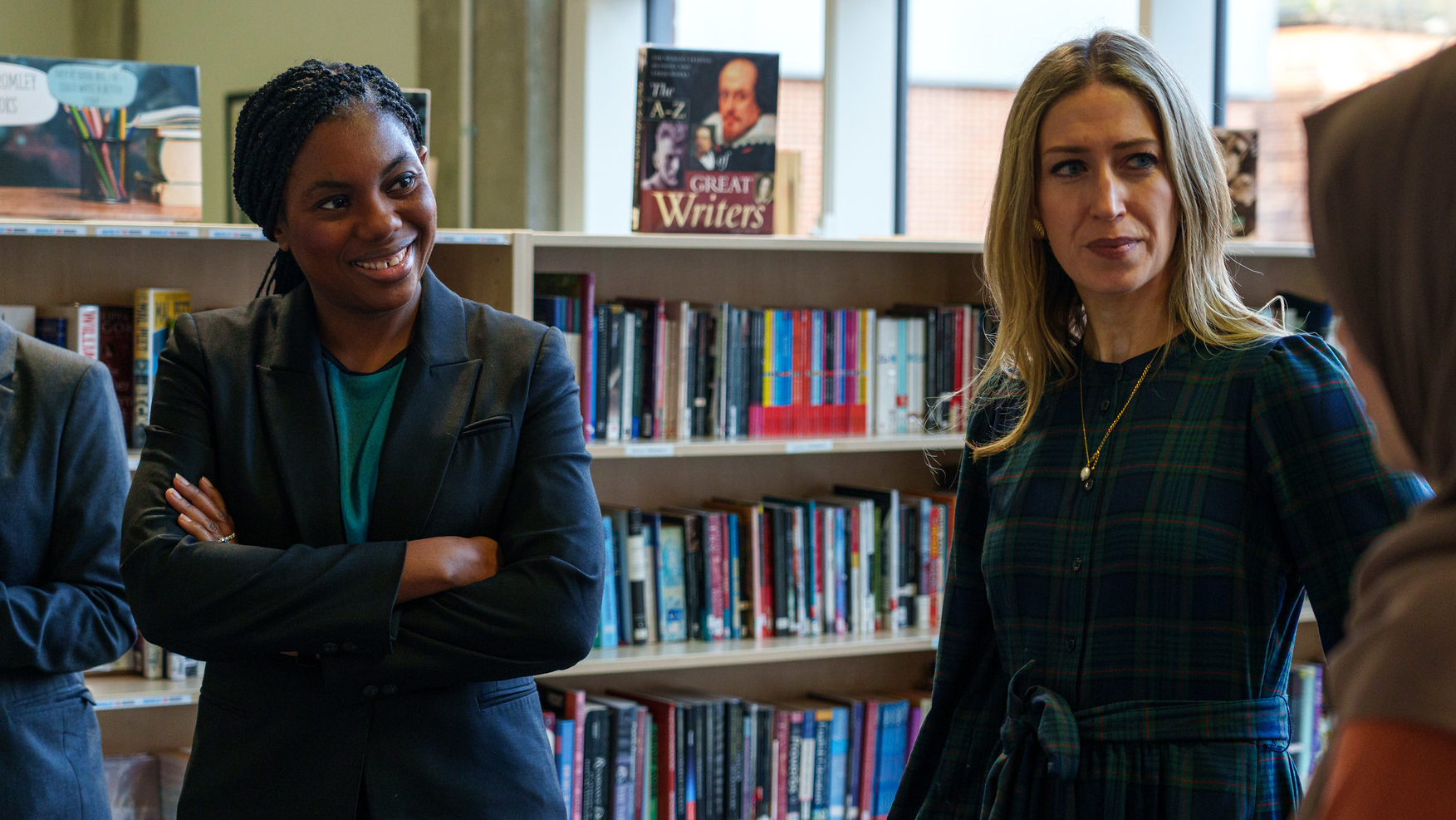
Kemi Badenoch and Shadow Education Secretary Laura Trott have announced the Conservative Party’s plan to slash screen use in schools and put pen and paper back at the heart of classrooms to improve standards in education.
We have sleepwalked into a situation where nearly a million children now spend almost every lesson on an electronic device, while schools spend an estimated £900 million a year on educational technology (EdTech), with no government oversight or evidence to demonstrate that this type of teaching improves learning.
Over 150 medical professionals, including GPs, paediatricians and ophthalmologists, have raised concerns about the impact on children's health and development - citing issues with speech and eyesight as symptoms of overuse of screens in children.
That is why we are pleased today to commit that the next Conservative government will publish guidance drawing on the work of the Health Professionals for Safer Screens and others. The evidence-based guidance will provide clear guidelines for schools on the appropriate use of screens in teaching, so that laptops and tablets aren’t the default in classroom learning and are used in a considered way which improves educational outcomes.
The evidence suggests that screen use in early years education is harmful to cognitive development and the Conservatives are clear that screens have no place in the teaching of children at this age. For primary education, we would require schools to keep screen use to a minimum and to only be used when necessary for the curriculum, such as for subjects like computing. For secondary school aged pupils, we are clear that screen time should be limited to a maximum of two hours per day - including for homework.
As part of our mission to ensure standards in education, we would put a stop to the introduction of screen-based exams and reverse Labour's screen-based Reception Baseline Assessment, which requires children as young as four to carry out assessments on a computer screen.
In a world of AI, we will review and minimise the amount of coursework in school assessment. We have a duty to ensure the next generation of workers are AI-resilient, and to avoid lowering educational standards by allowing children to become overly reliant on the use of generative AI platforms such as ChatGPT, Claude, and Copilot.
This is not about removing all screens from schools, not least because screens will be needed as part of the curriculum for subjects such as computing. It is about ensuring we are not blindly allowing electronic devices to dominate teaching in a way that could harm children’s cognitive development or lead to lower educational outcomes.
To back our plan to bring pens and paper back to the heart of learning, we will establish a new £250 million textbook fund to get children reading and learning from books again – with the ambition of providing three new physical textbooks per pupil. This will be funded by reproposing the nearly £900 million spent each year on Edtech, to help schools to replace unnecessary screen-based learning with physical textbooks and giving teachers more resources to deliver lessons without relying on digital devices.
We owe it to the next generation to get this right. We cannot be complacent in the use of new and emerging technology in schools - teachers need clear guidance on how to manage screen use and a better understanding of the risks associated with overuse. The Conservatives are the only party standing up for the preservation of standards in education. We are on the side of children and parents, and we're standing up for teachers as they navigate an increasingly difficult job.
Laura Trott MP, Shadow Education Secretary, said:
“We have sleepwalked into a situation where nearly a million children spend almost every lesson on a screen, while medical professionals warn of the damage excessive screen time can do to children’s health, development and learning.
“I want to slash screen use in classrooms and set a new norm where screens are no longer the default. That means no screens in early years, minimal use in primary schools except where required by the curriculum, such as computing, and a maximum of two hours a day for secondary pupils, including homework. We must also minimise coursework, stop screen-based exams and invest in textbooks.
“Everything in schools must be safe for children and improve standards. We've forced the government to get under 16s off social media and ban smartphones from the classroom, now we need to reduce screen time."
Watch our press conference here:


